● Free software for Linux

Write in markdown, keep everything in plain files.

A light, fast editor for notes and code: live preview, tables and formulae in their own windows, projects, git, whiteboards and logs — native, offline, in English and French.

Free software (AGPL-3.0) · no account, no telemetry, no network
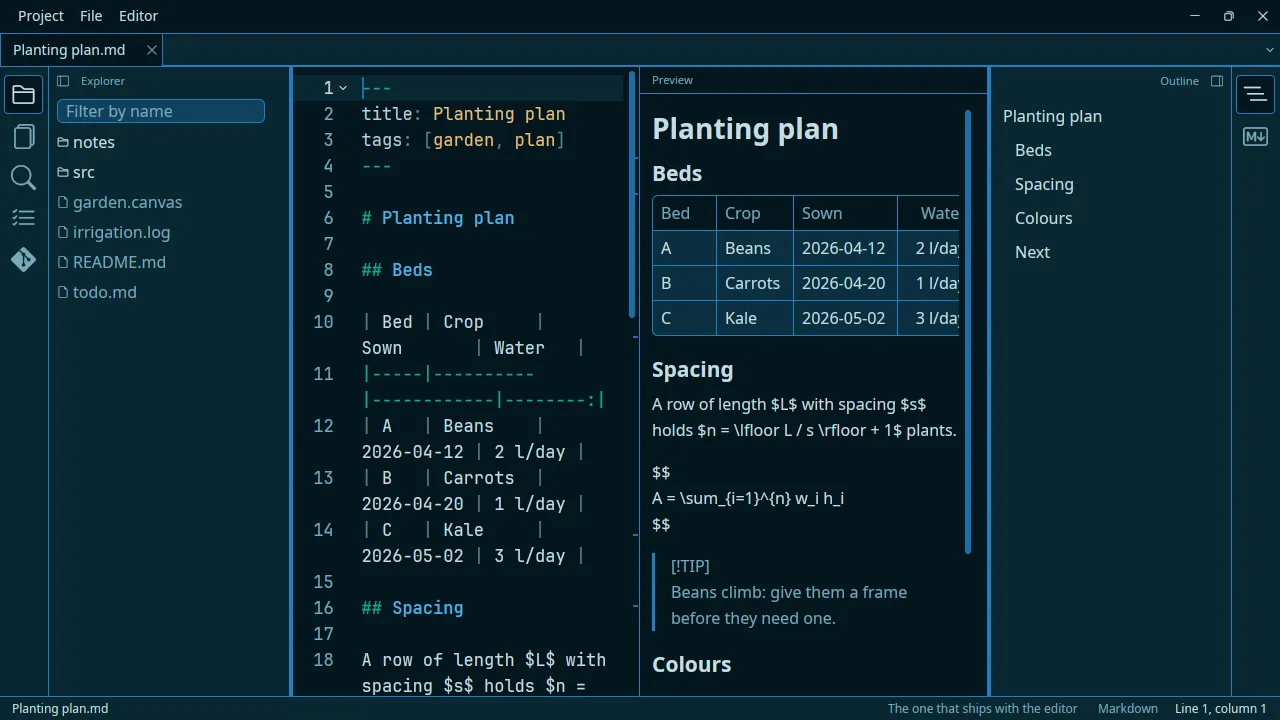
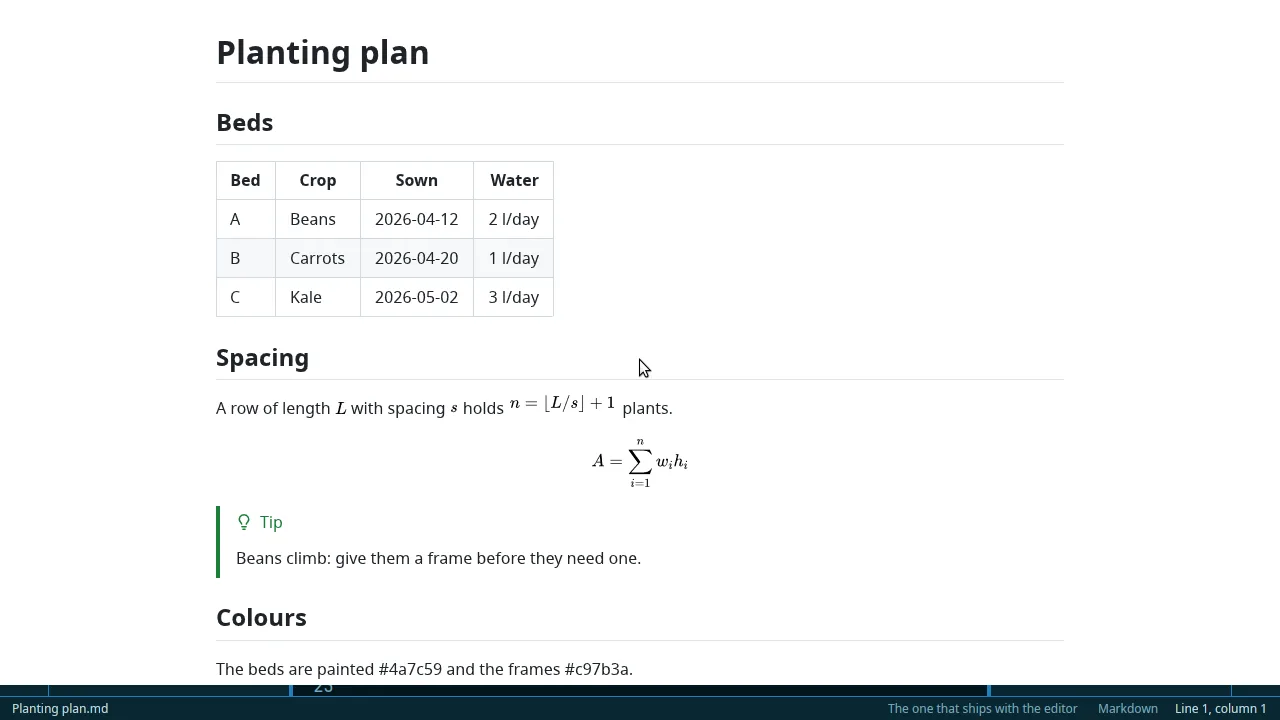
A note in split view: the explorer, the text, the live preview and the outline
~20 languageshighlighted by tree-sitter
11 languagesformatted out of the box
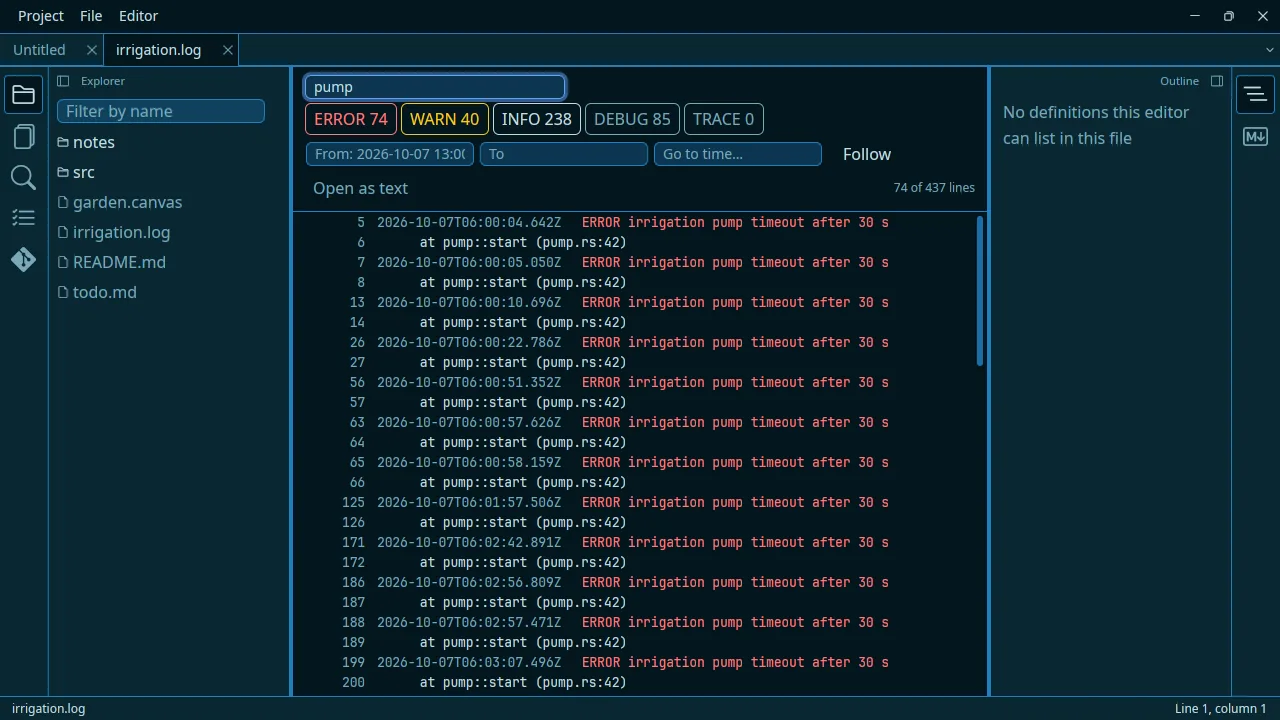
500,000 linesof log, filtered in 0.16 s
2 languagesEnglish and French, first-class
A word from me

Words from the author

I built this editor first of all for my own use, to bring together in one place several things I like using when I work on a project or on my notes (I sync my notes with a git repo and write them in Markdown). It’s also a way for me to try out working with AI and see what it does well and where it falls short.

I use and test it on Linux (Ubuntu), but there’s a Windows guide so you can try compiling it on Windows. If enough of you do, I might think about something more lasting. For now it isn’t worth it if I end up being the only one using it.

It’s built on a fairly “classic” Rust tech stack.

If you give it a try, I’d love to hear what you think!

Everything it does

One editor for the notes and the code around them.

The whole list, without the details — each one has its page in the documentation.

Writing markdown

  • Live preview, beside or instead
  • Outline
  • Table of contents
  • The / palette
  • Templates
  • Today's note
  • Lists that continue
  • Alerts & callouts
  • Footnotes
  • Front matter
  • Tags
  • Formatting
  • Spell check
  • Paste & drop images
  • Clipboard history

Tables, maths & symbols

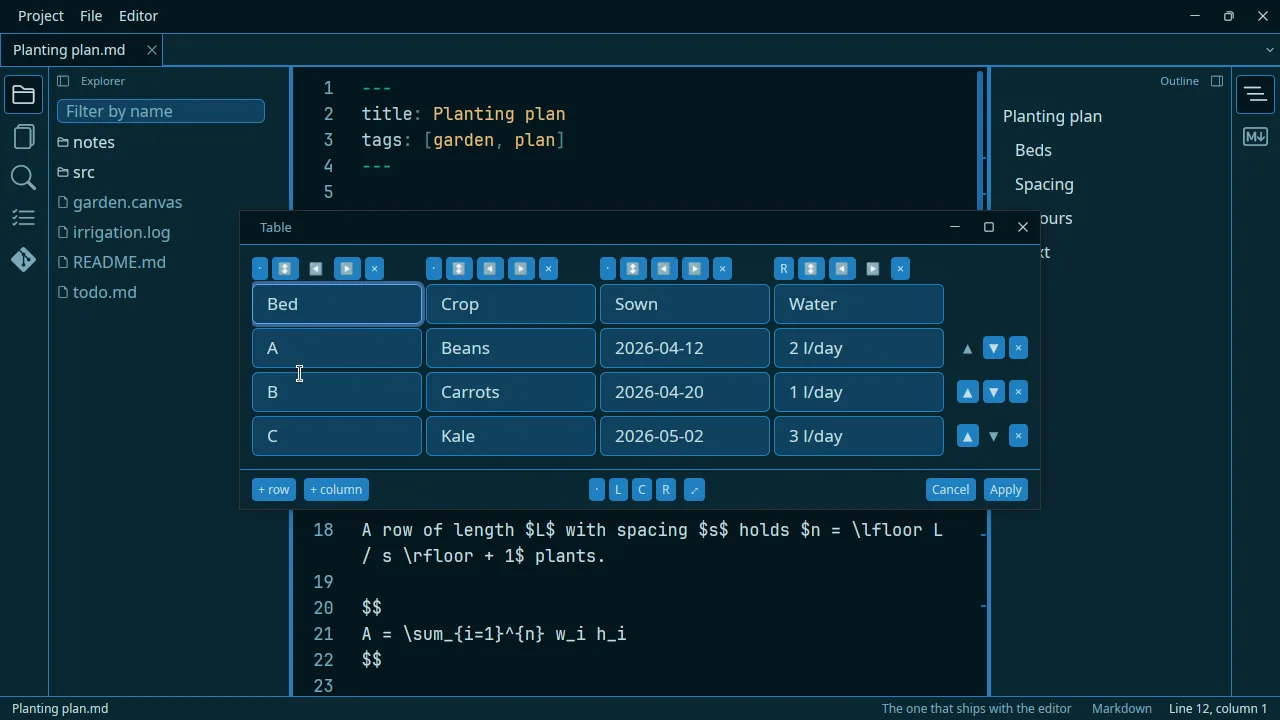
  • Table editor window
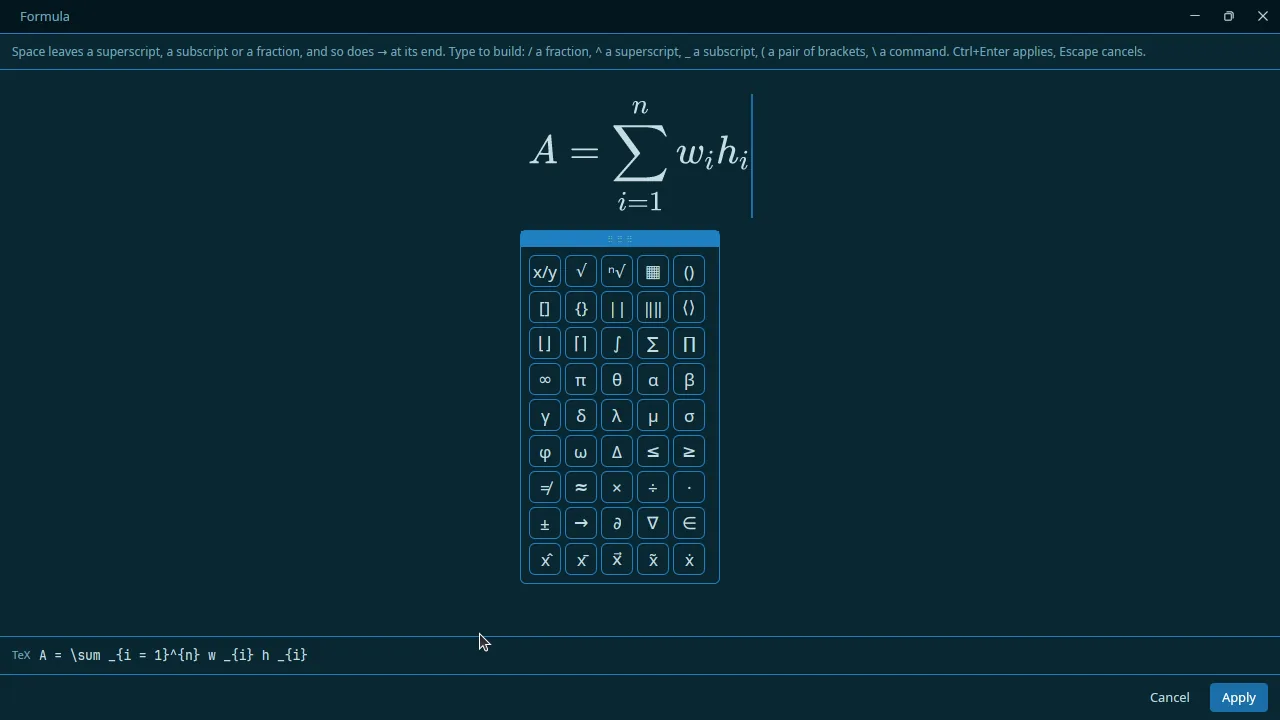
  • Formula editor
  • Maths drawn as SVG
  • Mermaid diagrams
  • Symbols & emoji
  • HTML entities
  • Colour picker
  • Colours shown in the text

Notes that link

  • Wikilinks
  • Embedded notes
  • New page from a link
  • Mentioned in
  • Mentions block
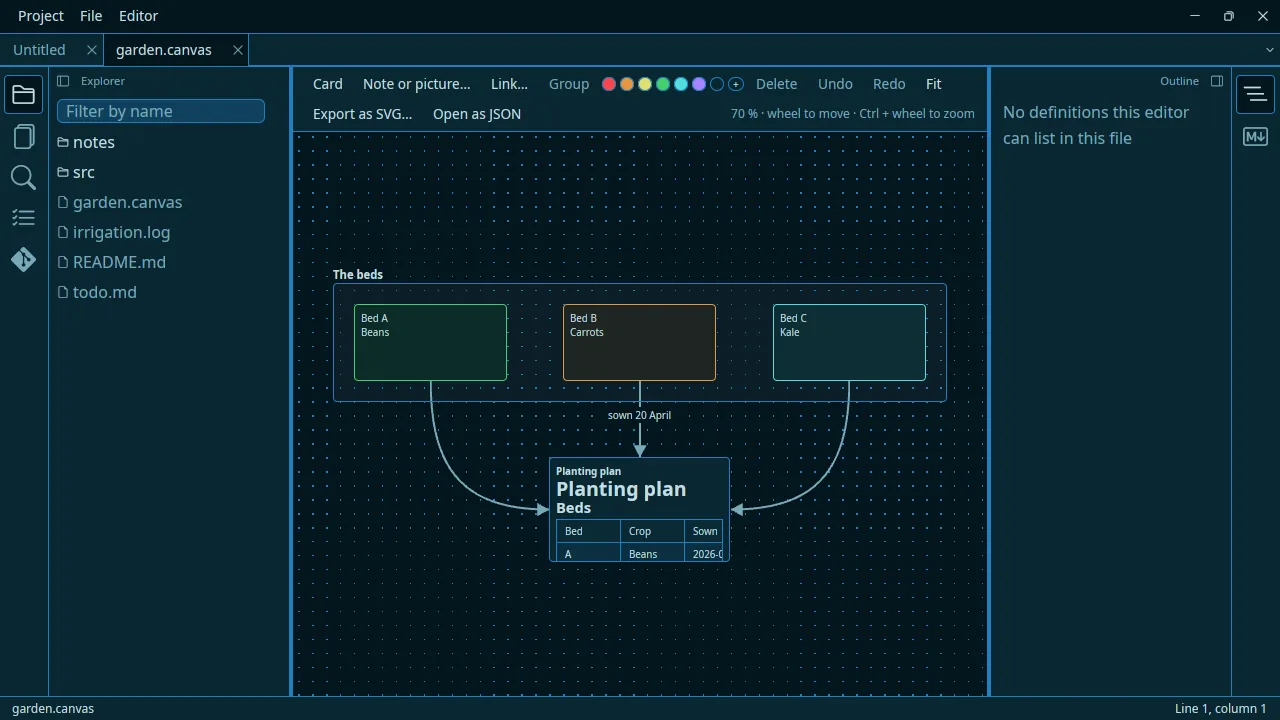
  • Whiteboards (.canvas)
  • Pins on your own map
  • Obsidian-compatible

Code

  • ~20 languages
  • Built-in formatters
  • rustfmt, gofmt, ruff, dprint
  • Outline of definitions
  • Find & replace
  • Language override
  • Invisibles
  • Soft wrap
  • Marks on the scrollbar

Projects

  • Explorer
  • Fuzzy file finder
  • Search & replace everywhere
  • TODO pane
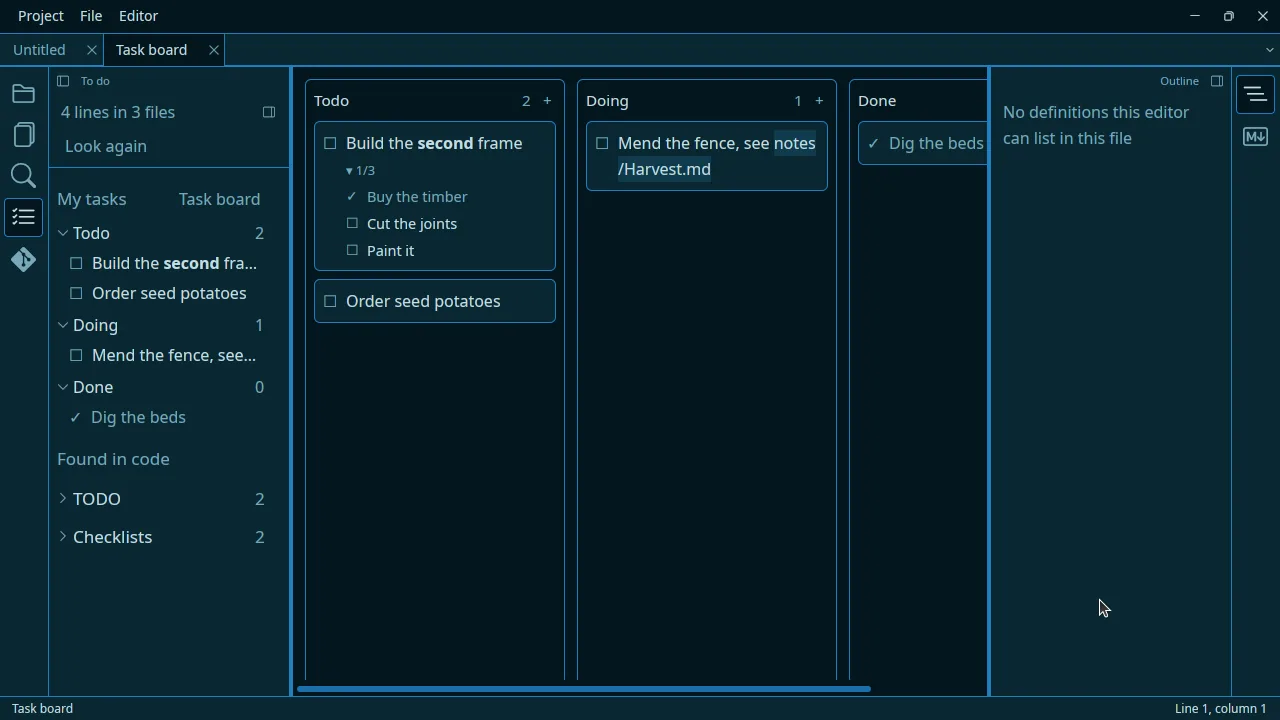
  • Task board
  • Sessions restored
  • Favourites
  • Local history
  • Several windows
  • Per-project settings

Git

  • Status & commit
  • Diff side by side
  • History & graph
  • Blame
  • Branches
  • Fetch, push, rebase
  • Conflict resolver
  • Autocommit

Read & publish

  • Heavy preview, real CSS
  • Your own stylesheets
  • Per-folder styles
  • Export as HTML
  • One-file pages
  • Export a whole project

Logs

  • Colour by level
  • Filter as you type
  • Hide a level
  • Follow a growing file
  • Huge logs, opened at once
  • Rotated files

Make it yours

  • 7 themes
  • Themes of your own
  • One commented settings file
  • Fonts & sizes
  • Panes on either side
  • English & French
  • Copy on select
A look inside

Every tool has a window of its own.

Tables, formulae, whiteboards and logs are edited where they make sense — and written back to plain text.
Every feature, in the user guide →

On purpose

Small, fast, and yours.

Measured, not promised

Every feature ships with a performance budget it is tested against.

Nothing leaves your machine

No account, no telemetry, no network request the editor makes for you.

Plain files

Markdown, .canvas, todo.md, TOML: everything readable in any other tool.

No terminal, no debugger, no plugins

A deliberate limit. It is what keeps the editor small and quick.

Ten minutes to feel at home.

Download it, open a folder of notes, and follow First steps.

↑